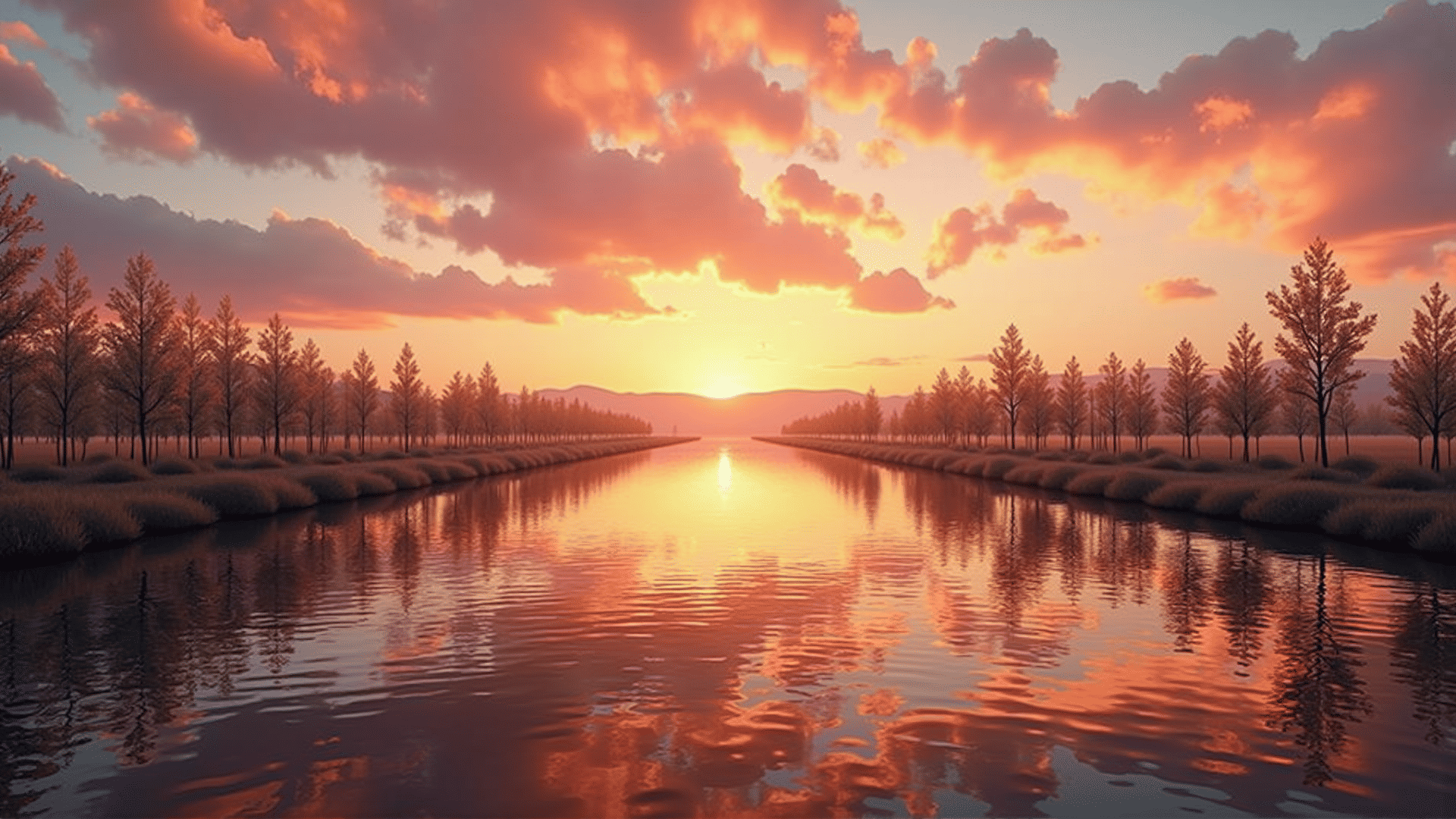
Enhancing your landscape photography skills involves more than just a keen eye and a beautiful location. Mastering the art of using your camera effectively can elevate your work to new heights, bringing your creative vision to life in stunning images.
-
Mastering Exposure
Understanding exposure is fundamental. In landscape photography, the interplay of light and shadow is crucial. Grasp the essentials of the exposure triangle: aperture, shutter speed, and ISO. Use a smaller aperture (higher f-stop number) for greater depth of field, ensuring that everything from the foreground to the horizon remains in sharp focus. Controlling your shutter speed will let you capture motion in your scene – a faster shutter will freeze action like wind-blown trees or flowing water, while a slower one can create dreamy, soft blurs in waterfalls or seas. -
Harnessing Natural Light
The quality of natural light can make or break a landscape photograph. The ‘golden hours’ – shortly after sunrise and before sunset – offer soft, warm tones and long shadows that add depth to your images. However, don't overlook other times of the day. Harsh midday sun can create dramatic contrasts, while overcast skies provide even lighting that eliminates harsh shadows. -
Using Filters
Filters are invaluable tools for landscape photographers. A polarizing filter can enhance colors and reduce glare from water and leaves, creating more vivid scenes. Neutral density filters allow you to use slower shutter speeds in bright conditions, perfect for capturing motion in water or clouds. Graduated filters help balance the light in compositions where the sky is much brighter than the land. -
Composing with the Rule of Thirds
The rule of thirds can be a powerful compositional guide. Imagine dividing your frame into thirds, both horizontally and vertically. Place key elements of the scene along these lines or at their intersections to create a balanced composition. This approach can guide the viewer’s eye through the image, adding interest and tension. -
Exploring Perspective
Experiment with different perspectives to add intrigue to your landscapes. Getting low to the ground can emphasize foreground details, while shooting from a high vantage point can highlight the grand expanse of the scene. Using a wide-angle lens allows you to capture more of the environment, but be mindful of distortion at the edges of the frame. -
Focusing Techniques
Achieving sharp focus across your landscape image is pivotal. Use manual focus to ensure precision, especially in low-light conditions where your camera’s autofocus may struggle. Hyperfocal distance is a technique to maximize depth of field, where you focus at a specific point in the scene to keep everything from a certain distance to infinity sharp. -
Bracketing for HDR
Bracketing involves taking several shots of the same scene at different exposures. This technique is particularly useful for high-contrast landscapes. By merging these shots in post-processing, you can create a High Dynamic Range (HDR) image that captures details in both the highlights and shadows. -
Embracing Post-Processing
While it's essential to aim for the best possible shot in-camera, post-processing can enhance the mood and impact of your landscape photographs. Use editing software to adjust exposure, contrast, saturation, and other elements to align the final image with your artistic vision.
In conclusion, mastering camera techniques in landscape photography is a journey of continuous learning and experimentation. By refining your skills in exposure, composition, and creative use of tools, you open up endless possibilities to capture the breathtaking beauty of the natural world.